
North Miami Neighbor Record Layers
Public records describe a block in layers. The parcel map supplies shapes and adjacency. Property cards give assessed owners and mailing addresses. A voter file may contain released registrants grouped by street after a lawful request. Reverse directories can show historic occupants for an available edition. Community sources should be limited to public boards, city liaisons, events, and meeting records.
| Source | What It Shows About a Block | Access |
|---|---|---|
| Parcel map | Adjacent parcel shapes and linked owner cards | Free Miami-Dade web map |
| Property roll | Owner, mailing and site address, folio, municipality | Free address or folio search |
| Voter extract | Released registrants grouped by street or precinct | County request; protected data withheld |
| Public community contacts | Board contacts, city liaisons, events and meetings | Public pages only; no private roster |
| Reverse directory | Historic occupants or telephone entries by address | Library holdings; edition gaps |
An assessed owner is not a complete household. A matching mailing and site address supports, but does not prove, owner occupancy. A homestead exemption strengthens that inference only for the claimant. Apartment owners, tenants, household members, and protected residents may not appear in an ownership roll at all. Date every result because tax, voter, and custody information changes.
North Miami Neighbors and Parcels
North Miami uses a countywide directional grid, so preserve NE or NW and the street type. Start with the exact number in Miami-Dade Property Search. If it fails, try the form without a unit or use visual map navigation, but never switch quadrants. Corner parcels can use the cross street, and common areas may have no ordinary site address.
- Parcel
- A mapped unit of land with a folio and legal description.
- Situs address
- The physical site address of the property.
- Mailing address
- Where the tax office sends correspondence; it may be elsewhere.
- Folio
- Miami-Dade’s parcel identifier, used to keep each lot distinct.
For a condominium, a parcel may represent one unit, shared elements, or a parent tract. A whole-building owner does not identify tenants. Exclude association and common-area parcels before counting residential lots.
The parcel card can also show land and building use, sale references, assessed and market values, exemption codes, and year-built data. Those fields help explain the lot, but none is a resident roll. An exemption may support a limited owner-occupancy inference for the claimant. It does not name all adults, children, relatives, or guests. Record only what the official field states and leave household composition unknown unless a separate lawful source addresses it.
Mailing points can also distort a quick visual scan. An owner may receive tax mail through another home, an office, or a mailing agent. Vacant land and common property may lack a standard situs address. Build the North Miami neighbor table from parcel polygons and folios, not from map pins alone. That method keeps a corner parcel or rear lot from being assigned to the wrong side of the block.
Map North Miami Neighbor Parcels
The embedded county viewer supports address search, pan, aerial imagery, parcel polygons, and click-to-identify popups. Research did not verify a dedicated radius, buffer, or export tool. Build the block by visual adjacency, one polygon at a time, rather than promising an automated neighbor list.
- Locate the target address and record its folio, municipality, site address, subdivision, lot, and block.
- Zoom until boundaries are clear. Click each contiguous polygon in side-of-street and lot order.
- Keep owner and mailing address in separate columns. Note corner lots, vacant parcels, and common areas.
- Check the municipality field on every border parcel because postal North Miami can extend outside the city.
- Date the block table. For a whole named road, use the North Miami street directory workflow.
A legal description is more stable than a street label when matching deeds. Still, deeds show title parties rather than all North Miami neighbors who occupied a site. Keep title, tax, voter, directory, and permit roles in separate fields.
North Miami Voter Block Records
Florida’s personal voter lookup uses identifying data and does not permit browsing North Miami neighbors by address. A broader public extract must come from Miami-Dade Elections. Specify released fields, street or precinct geography, the snapshot date, and desired format. Media, programming, or extensive-use costs may apply.
Released fields can include name, residence or mailing address, party affiliation, registration date and status, precinct, and participation history. That history identifies elections in which a person participated, never ballot choices. Driver-license or Florida ID numbers, Social Security numbers, signatures, specified registration data, and protected addresses are withheld under Florida law. Absence from a file does not prove absence from the block.
A released extract is a snapshot. Registration may be inactive, recently changed, spelled differently, or shielded by an exemption. Sort on the full standardized street address, but retain the record’s original address text and date. Do not combine two registrants merely because their surname and ZIP match. When a street crosses a municipal boundary, check each parcel’s municipality before treating the group as North Miami neighbors.
Note: The identity-gated status lookup is a personal tool, not an open North Miami neighbor directory.
North Miami Neighborhood Contacts
City material verifies five useful place names. It does not supply a public resident roster for any of them. Use the names to locate council districts, public meetings, event notices, and published board contacts. An HOA login, congregation list, club roster, or block-watch membership list stays private even when the group itself is well known.
| Verified area | Public context | Directory limit |
|---|---|---|
| Keystone Point | Eastern bayfront neighborhood in city planning material | No public resident directory verified |
| Sans Souci | Eastern bayfront neighborhood in city planning material | No public resident directory verified |
| Breezeswept Estates | Named on the District 3 city page | Public council contact only |
| Griffing Estates | Named on the District 3 city page | Public council contact only |
| Irons Manor | Named on the District 3 city page | Public council contact only |
North Miami’s Caribbean community also makes congregations and cultural groups important public meeting points. Use only contacts that the organization publishes for outreach. Do not infer faith, membership, or residence from a name on a public event notice.
National Night Out notices, council district updates, neighborhood meetings, and city agenda records can document public-facing contacts at a given time. They are stronger sources for civic connection than an old personal listing because the organization chose to publish them. Still, a meeting attendee, speaker, volunteer, board member, or liaison holds a distinct role. None of those labels proves that the person lives next to the target parcel.
No authoritative, complete inventory of current North Miami associations with public-directory status was located. That gap should remain visible. Search city district pages and planning material for a verified neighborhood name, then contact a published board or liaison to ask what public information exists. Do not fill the gap with a private portal, an unofficial roster, or assumptions based on a subdivision name.
North Miami Neighbor Tool Comparison
Official records and commercial compilations serve different purposes. County records state the custodian, record date, role, and correction channel. Commercial tools merge purchased and public data, can lag updates, and may join people with similar names. Treat any compilation as an unverified lead and return to the parcel, voter custodian, or court source.
| Source type | Strength | Limit |
|---|---|---|
| Official parcel and voter records | Named custodian, dated fields, defined purpose | Owners and released registrants are not a full household |
| Public community pages | Current board, liaison, event, and meeting contacts | No authority to expose a private member roster |
| Commercial neighbor tools | May suggest names for further checking | Possible stale data, merged identities, unclear roles |
Official North Miami Safety Lookups
Safety searches should remain narrow and official. The Florida Department of Corrections search covers the state prison and supervision system. The FDLE offender registry has name, city, county, ZIP, type, and status filters. Neither is a general list of North Miami neighbors, and a name match needs careful identity checks.
The state corrections interface provides its own current record context.
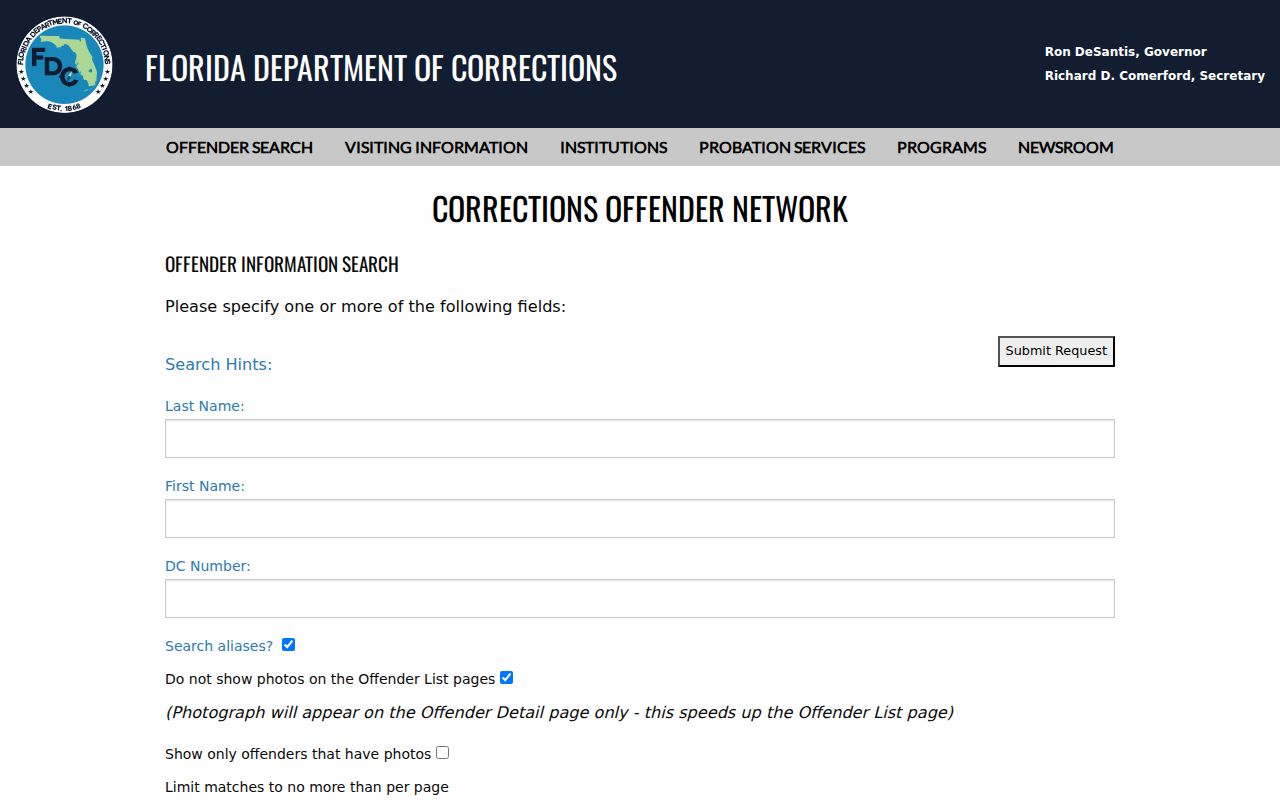
Use the listed custody or supervision data as a dated official record, not proof about other people at an address.
The FDLE registry provides the specialized location filters documented in the research.
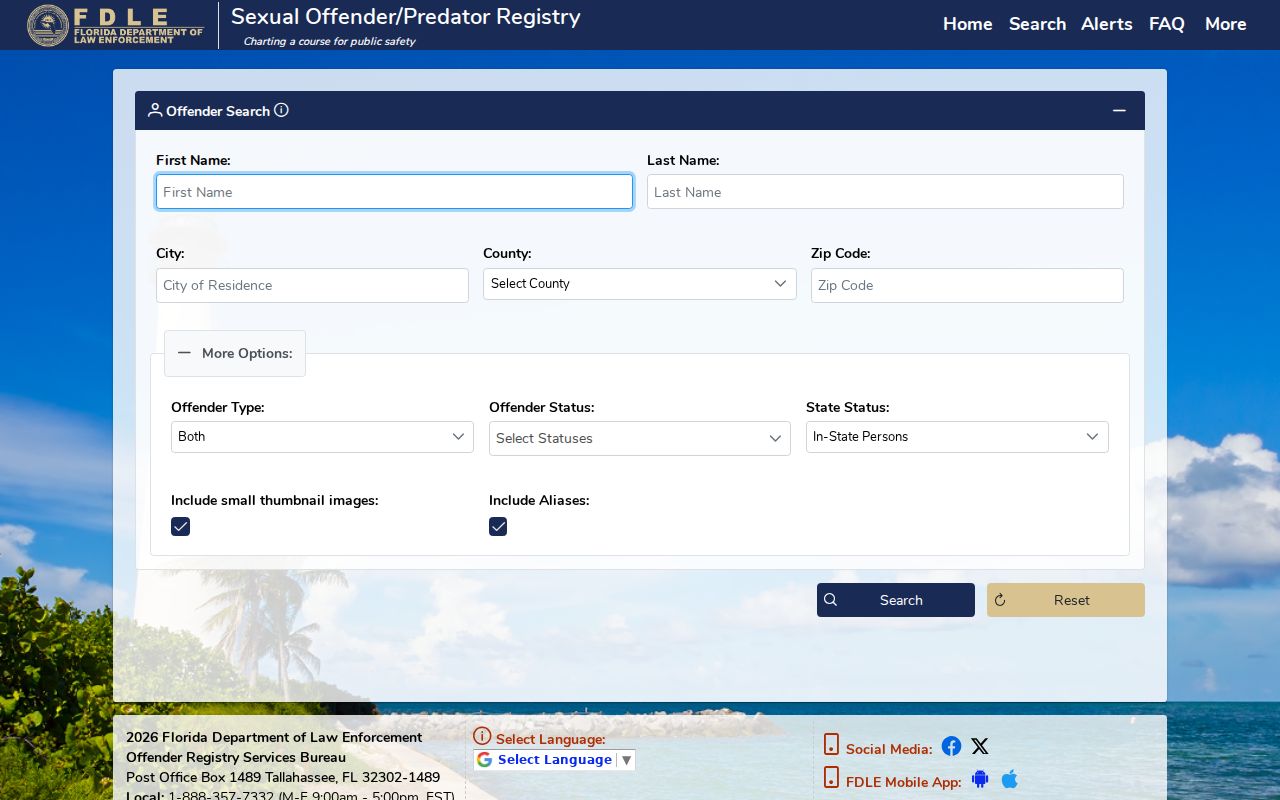
FDLE warns that fingerprint comparison is needed for positive identification and that registry data cannot be used to facilitate a crime.
For a formal statewide criminal-history channel, FDLE explains its Florida Checks options.
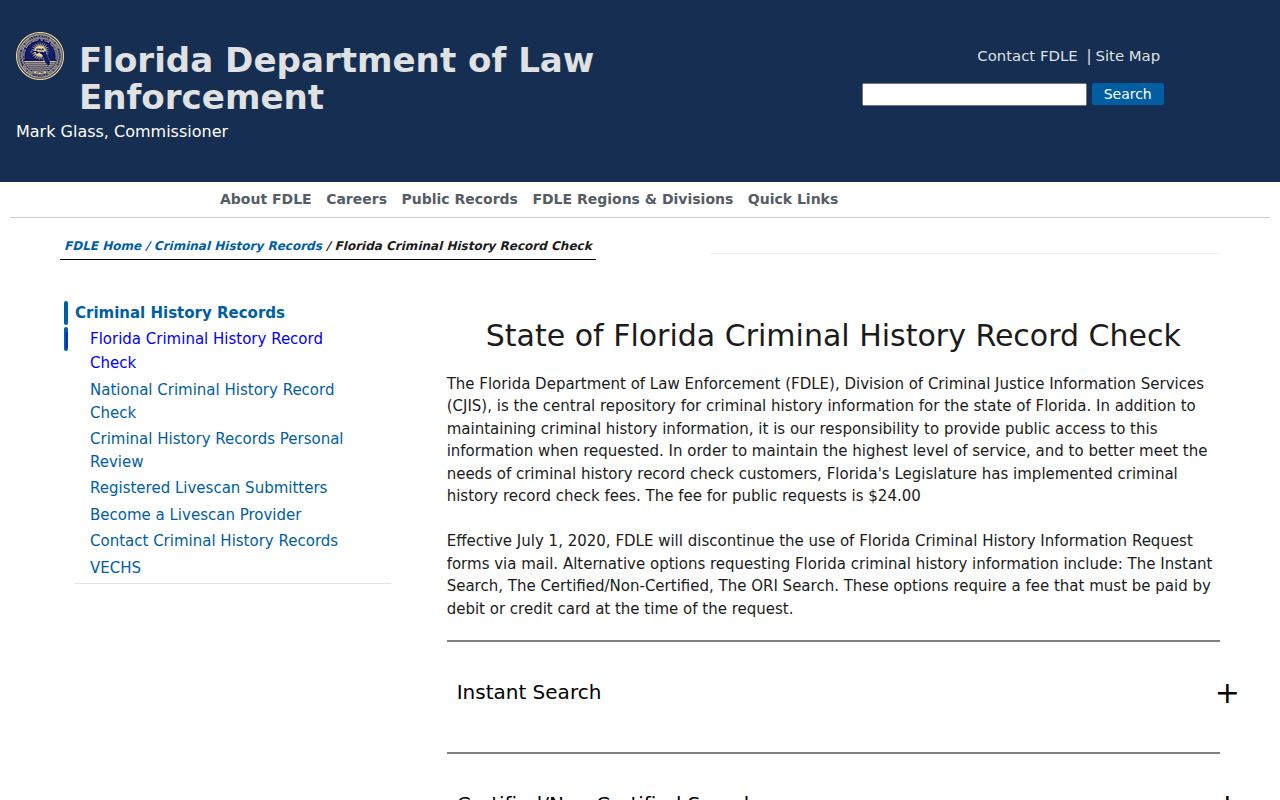
This is a separate paid record channel, not a block or radius search.
North Miami police reports follow the city records channel. Active investigations, victim details, juvenile information, and exempt identifiers may be withheld or redacted. Crash reports also have a restricted period. A report can document an incident at an address, but it does not establish that every named person lives there or that every nearby resident was involved.
For current county custody, use the Miami-Dade Corrections channel rather than the state prison locator. The systems cover different populations and time frames. Record the inspection date, status, agency, and identifier. Never approach or accuse a North Miami neighbor based on a similar name, an old status, or a commercial compilation.
North Miami Neighbor Privacy Limits
Utility, delivery, and motor-vehicle customer data do not become public block directories. Florida’s Address Confidentiality Program supplies a substitute mailing address for qualifying victims of domestic violence and stalking. Other exemptions shield home and contact details for listed officials and safety-sensitive classes. Voter and recorded-document redaction rules also withhold specified addresses and identifiers.
The Florida Digital Bill of Rights gives rights against covered large data controllers, but it is not a universal deletion law and generally treats government records as publicly available information. For a wrong official entry, seek correction from its custodian. For a commercial listing, use the provider’s privacy process and recheck later.
Recorded-document redaction follows its own statute, so a truthful public deed is not erased merely on request. Motor-vehicle personal data has separate protection. These boundaries explain why a lawful North Miami neighbor search can show a parcel owner while withholding a driver record, utility customer, protected voter address, or private association member. Access depends on the record series and custodian, not on how strongly a searcher wants a complete block list.
Lawful use. Research North Miami neighbors for civic curiosity, reconnection, or personal safety. Never watch, harass, threaten, or intimidate anyone.
Florida’s consumer-protection office accepts reports about deceptive practices.
Interstate or online fraud can also be reported through the federal channel.
Those official contacts are safer than confronting a person based on an unverified search result.