
North Miami Directory Shelves
North Miami city directory research relies on three linked repositories. Miami-Dade Public Library System has the largest genealogy stack, HistoryMiami holds noncirculating local material, and the State Library supplies a statewide shelf and reference service. Public collection pages do not publish a complete North Miami title and year list. Ask staff to verify an edition before travel.
| Collection | Years | Where Held | Access |
|---|---|---|---|
| Miami city directories | At least an 1896 reprint; later Polk runs | MDPLS, HistoryMiami, State Library | Onsite; catalog check |
| Major-city directories | Selected cities, 1860s-1940s | MDPLS Genealogy Collection | Chiefly in-library |
| Telephone and reverse volumes | Exact local runs not posted | MDPLS and HistoryMiami | Reference request |
| Florida state censuses | 1885, 1935, 1945 | MDPLS | Microform and databases |
| Obituary Index | 1896-2008 | MDPLS | Free citation index |
A catalog record may place North Miami inside a metropolitan Miami volume. Search North Miami, Miami, Arch Creek, Miami Shores, Polk, telephone, suburban, reverse, and criss-cross. Statewide date ranges are not proof of annual local coverage.
Exact publisher and year claims need a title-page or catalog check. The public research identifies locally held R.L. Polk Miami directories and a reprinted 1896 Miami volume, but it does not establish an unbroken North Miami run. Ask the reference desk to check the alphabetical section, street guide, suburban coverage, and any separate telephone index for the target year. A volume labeled Miami may still include North Miami households, while a North Miami search in a brief online title field may miss that broader item.
North Miami City Directory Library
MDPLS Special Collections documents more than 27,000 genealogy publications and 35,000 microforms. Sources include city directories, telephone indexes, surname files, Florida censuses, passenger lists, World War I draft records, and Miami air arrivals from 1930 through 1942. Physical genealogy material is mainly used in the library, and only a small share circulates.
The library's special-collections landing page appears below.
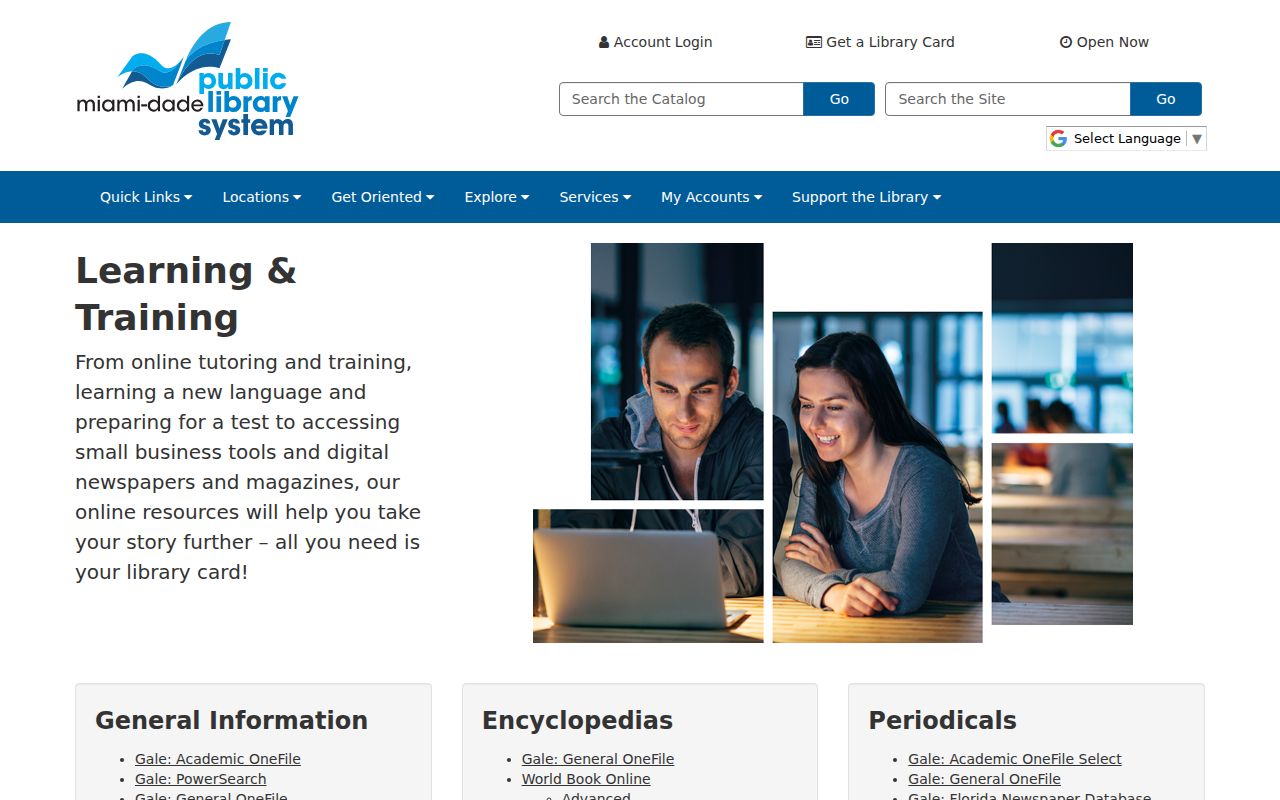
Its access notes set expectations for licensed databases and in-library FamilySearch use.
Contact a genealogy reference librarian with the desired place names and years. Ancestry Library Edition follows library terms. FamilySearch is available at MDPLS locations and may require a free account for some features. Confirm current access rather than assuming a database works from home.
North Miami Directory Genealogy Files
MDPLS expanded online Genealogy Collection Surname Files in October 2024. Donated newsletters, clippings, family trees, and folders can preserve people who never appeared clearly in a city directory. Some files date to the 1800s, and a growing group can now be read online.
The digital genealogy collection is the direct discovery point.
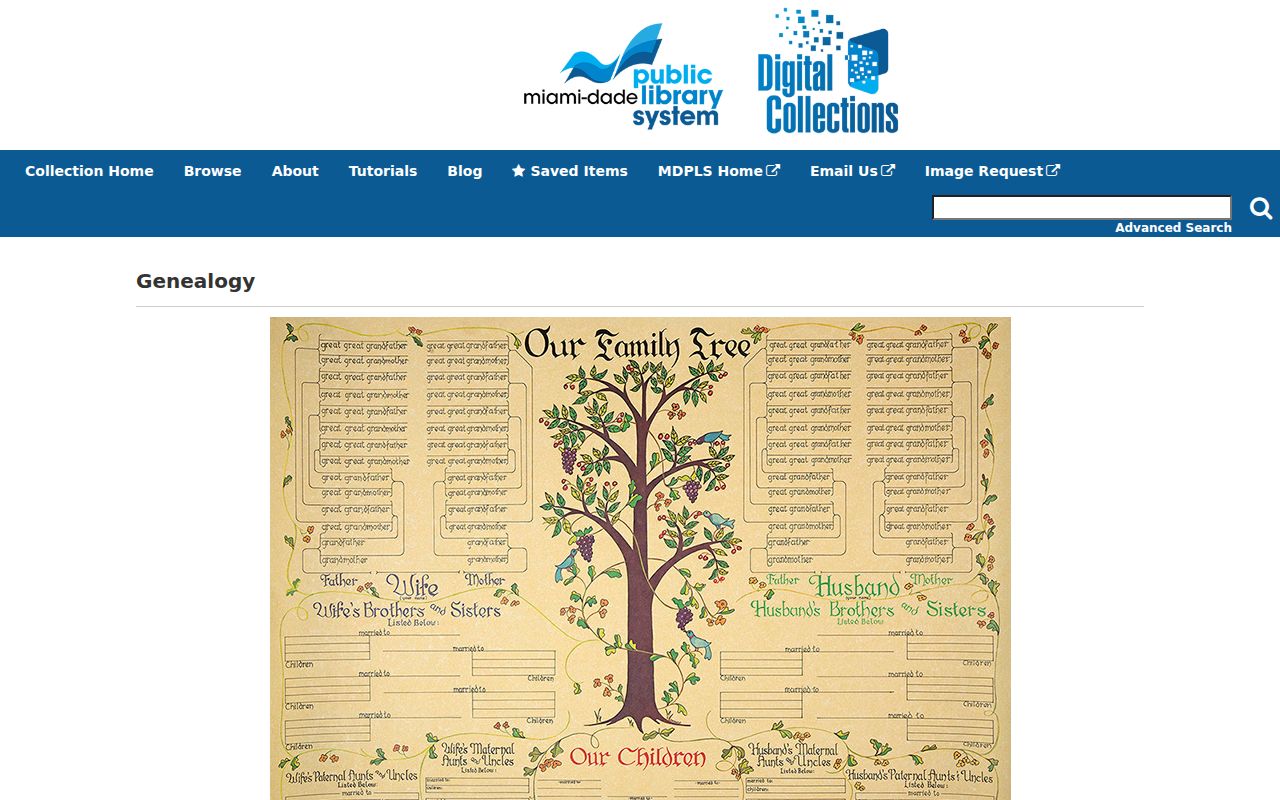
The collection shows why a surname search should complement edition-by-edition directory work.
Preserve the item metadata. Donated family material is an archival lead, not a certified fact. Test names, dates, and relationships against census schedules, deeds, vital records, newspapers, or probate files.
Read North Miami Directory Entries
A period Polk-style entry often begins with surname, given name or initials, and a spouse in parentheses. It may continue with occupation, employer, residence, and a homeowner mark. “Wid” identifies a widow and “r” means resides. Business entries can identify a proprietor and business address. Conventions vary by edition.
| Name | Literal spelling, initials, suffix, and spouse notation |
|---|---|
| Work | Occupation, employer, or business role |
| Residence | Street address and owner mark used by that edition |
| Context | Nearby surnames, cross-references, and business listings |
- Criss-cross directory
- A volume ordered by street address or phone rather than surname.
- Householder index
- A list centered on the named adult recorded for a household.
- Abbreviation key
- The edition's list explaining shortened occupations, status marks, and street terms.
Photograph the title page and key with the entry. Record title, publisher, year, page, section, exact wording, and call number. Put expansions in brackets so print and interpretation remain distinct.
A good transcription also records the date when information was gathered, if the publisher printed one. Note whether the entry came from the alphabetical or street section, preserve punctuation and accents, and list nearby same-surname entries without assuming a family tie. North Miami's Caribbean communities make careful treatment of compound surnames, French or Haitian Creole forms, accents, and Anglicized spellings useful. Search variants, but do not merge identities based on language or ethnicity.
North Miami Directory Companion Collections
The HistoryMiami Research Center holds city directories, yearbooks, scarce newspapers, ephemera, manuscripts, and architectural files. Its Tebeau Library is noncirculating. A family, school, business, or civic-group manuscript may add context when a printed directory has no clear match.
The research-center source is shown here.
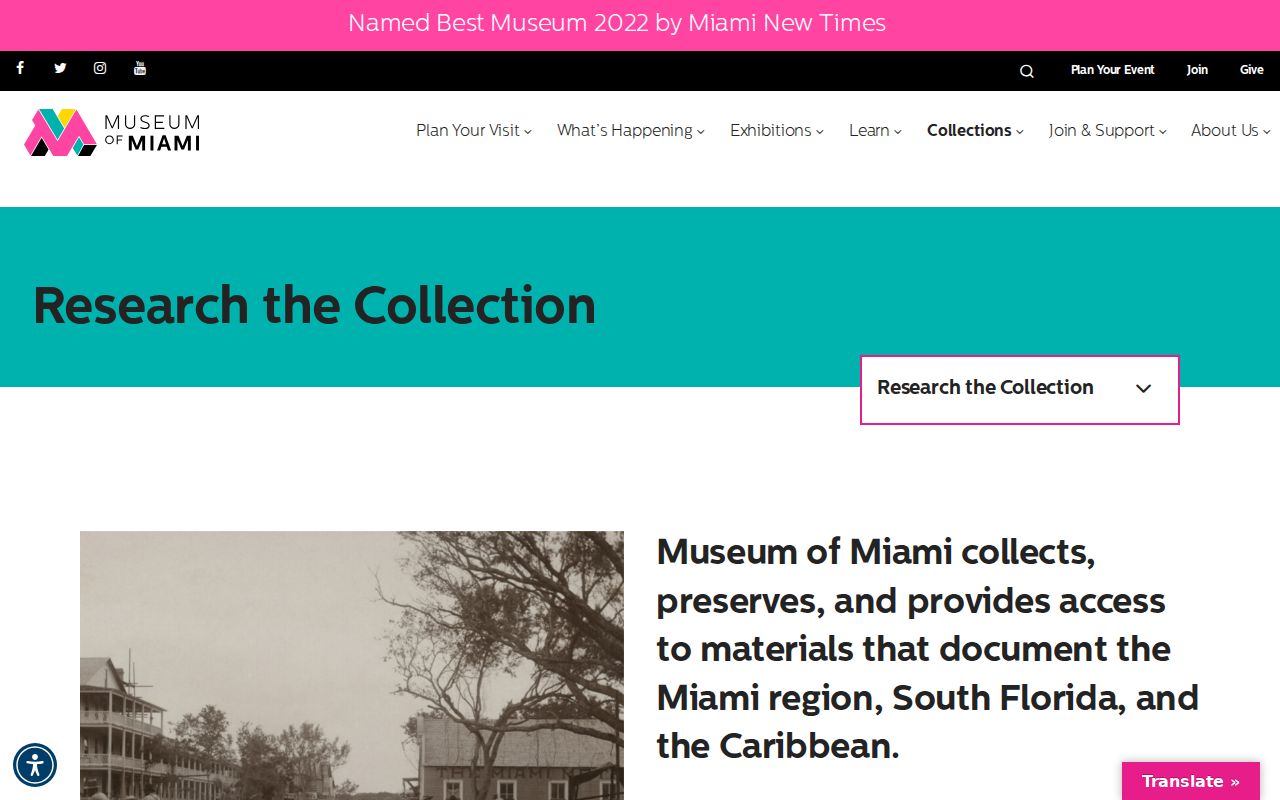
The source confirms companion collections that can explain an entry or date an address.
Yearbooks can reconnect classmates or identify a cohort. Newspapers report arrivals, marriages, civic work, school events, and deaths. Architectural holdings and maps follow the structure while city directories follow people. Private rosters remain private unless their organization makes them public.
Trace North Miami Directory Households
City directories fill years between census schedules, but one edition does not prove a continuous stay. Start near a known date and move both ways. Keep a separate row for each volume even when the entry seems unchanged.
- Verify the old street and municipality name for the year.
- Search the surname section, then the street or reverse section.
- Record each adult, spouse mark, occupation, employer, address, and owner symbol.
- Repeat adjacent editions to bracket an arrival or departure.
- Pair findings with Florida's 1935 and 1945 censuses and federal schedules through 1950.
- Use obituary, probate, and deed evidence to test the endpoint.
The 1950 federal census is the latest public decennial schedule under the 72-year rule. Relationships, age, birthplace, and occupation can separate namesakes. Enumeration districts and old municipal limits need their own maps.
Florida's 1935 and 1945 state censuses are especially useful around North Miami's postwar expansion. Put directory editions on both sides of each census year. A name that appears at the same address with the same spouse and occupation is stronger than a surname alone, though it still deserves another source. If the address changes, compare the old and new legal descriptions, local maps, and newspaper notices. Census boundaries do not equal today's city line, so use the municipality name and enumeration map from the period.
North Miami's Four Catalog Names
Records may sit under Arch Creek, Town of Miami Shores, Town of North Miami, or City of North Miami. The town incorporated in 1926 after 38 of 47 registered voters took part. A 1931 boundary episode removed oceanfront territory and preceded the North Miami name. The city name arrived with the 1953 charter.
These are real search keys. Try each one in catalogs, title pages, maps, deeds, and newspapers. A 1920s person may appear under Miami or Miami Shores even when the site is now North Miami. Former oceanfront land may belong to another municipality.
The older labels also explain why one household may seem to jump between places without moving. Present North Miami began around Arch Creek, where a military trail dated to 1856, Charles Ihle settled in 1891, the Flagler railroad arrived in 1896, and a post office and school followed in 1905. Directory publishers, newspapers, and later catalogers could choose different geographic headings. Record the label exactly as printed, then add the modern jurisdiction as a separate research note.
State Help for North Miami Directories
The State Library city directory collection is arranged by city and year. Reference staff can check the shelf at 850-245-6682 or library@dos.myflorida.com. Its early-1900s-to-present range describes Florida as a whole, not a complete North Miami run.
The collection page is captured below.
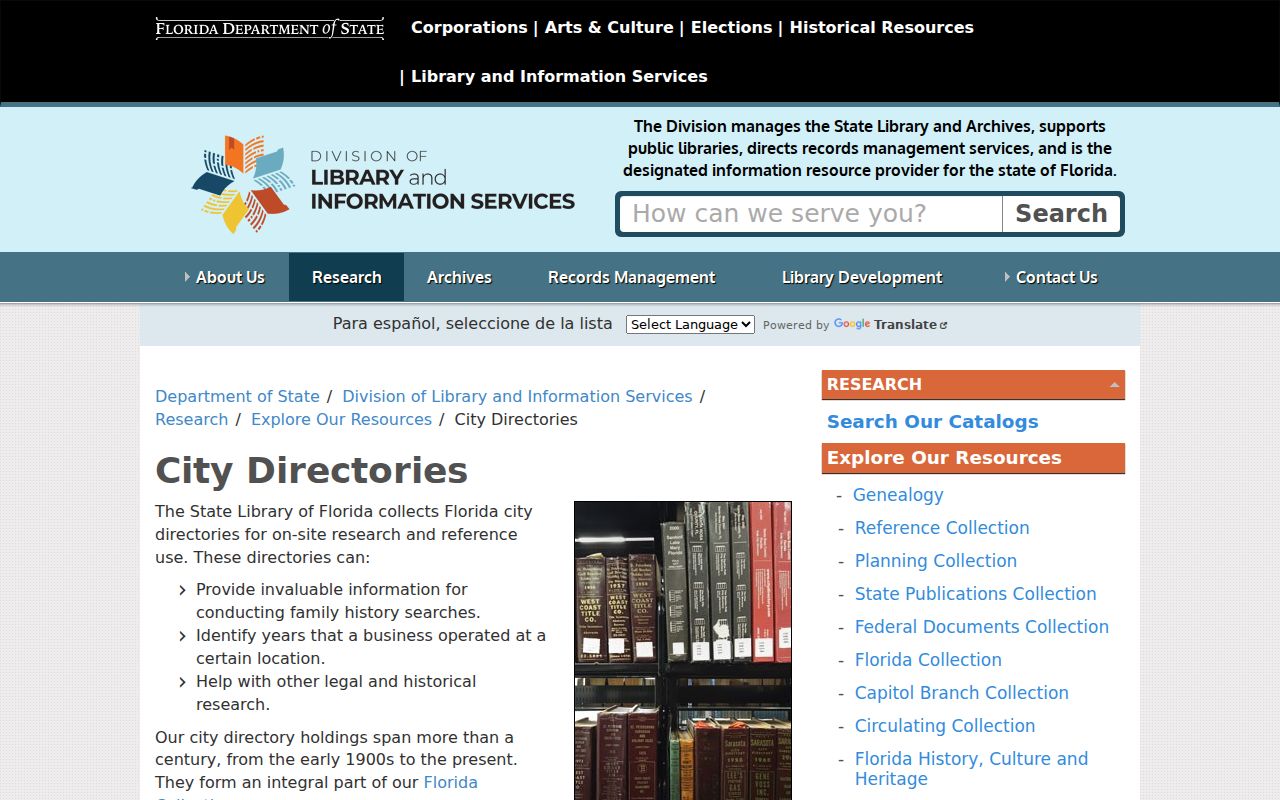
The source is a statewide fallback when a local catalog hides an edition.
The Florida State Archives also offers catalog, reference, and Florida Memory routes.
Archives staff can identify Miami-Dade record groups even when the item is not online.
Close North Miami City Directory Trails
The Miami-Dade Obituary Index has more than 915,000 citations from Miami newspapers dated 1896 through 2008. It is not the obituary text. Record the decedent, newspaper, date, and page, then retrieve the issue. Survivor names may connect a directory household to probate and property records.
A person missing from one city directory may have moved, died, changed names, been omitted, lived outside the canvass, or lacked listed phone service. Search adjacent editions, a spouse name, employer, business section, census, obituary index, and deed before deciding what the gap means.
The newspaper citation and probate docket answer separate questions. The citation locates an article that may name family, while the docket proves that a court file exists and identifies public party roles. Read the article itself before recording a relationship. Then compare dates and addresses with the directory transcription. A deed can test whether the same household owned land, but it still does not list every resident.
Religious and community archives may be useful in North Miami because migration histories can cross languages and naming customs. Access must be confirmed with each congregation or archive. Search compound surnames, accents, Anglicized forms, and French or Haitian Creole variants without making assumptions about identity. Public business or board contacts are not household rosters.
Other MDPLS sources can bridge the last gap. Passenger lists, World War I draft cards, and Miami airplane arrivals from 1930 through 1942 may connect a person to a date or relative. The library's Miami Herald archive and HistoryMiami's scarce newspapers can add civic, school, marriage, or business notices. The Gleason Waite Romer Collection contains 17,500 photographs and negatives from 1925 through the 1950s, while Florida maps and atlases include aerials, plats, and blueprints. These sources add context, but the literal city directory entry should remain the starting citation.